


Table of contents
- How Snus Came to Sports ›
- What's Behind It? Snus in Football and Hockey ›
- How Does Nicotine Work in Sports? ›
- What Do Studies Say About Performance? ›
- Risks You Should Know ›
- Snus in Strength Training and Fitness ›
- Snus in Sports: Sensible or Not? ›
- Focus Without Nicotine: Alternatives That Work ›
- How Should One View Snus in Sports? ›
You see it more and more often - someone quickly placing a pouch under their lip before sports. No big deal, seemingly routine. In football locker rooms, hockey clubs, gyms or fitness centers, the pouch appears regularly. Often associated with the expectation: more focus, sharper perception, better performance. Whether there's any truth to this, what studies say about it, and what specific risks come with sports - we'll clarify all this in this guide.
Note on terminology: In this text, we often use the term "Snus" as a substitute for today's widespread, tobacco-free Nicotine Pouches (All White). While traditional tobacco-containing snus was almost exclusively found in locker rooms in the past, today the white pouches without tobacco content usually dominate the market.
How Snus Came to Sports
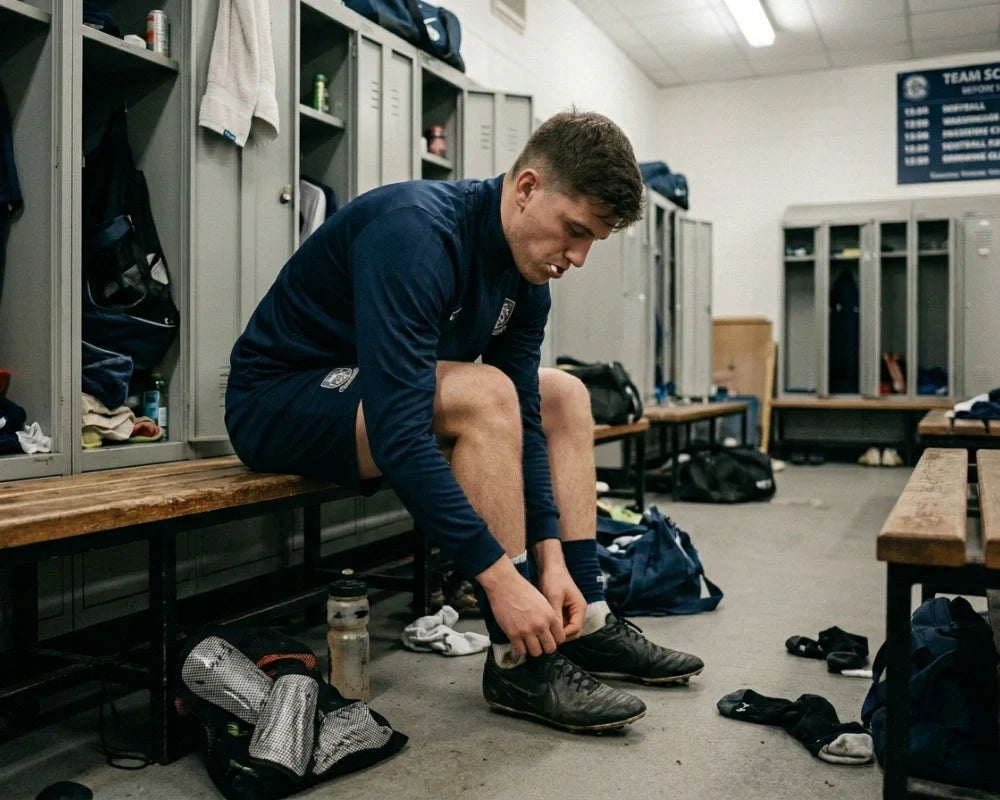
Just before kickoff. The locker room is quiet, everyone going through their preparations. Music plays in the background, someone laces their shoes for the third time, another puts a pouch under their lip. What has been part of everyday life in Scandinavian professional teams for decades has now also arrived in German amateur and semi-pro leagues. Snus in sports is real. Although we must differentiate today: While the roots lie in tobacco-containing snus, modern athletes almost exclusively reach for tobacco-free nicotine pouches.
Especially in contact sports like hockey and football, snus is culturally deeply rooted. Swedish and Finnish players brought the product early into professional sports, where it quickly spread in locker rooms. This has less to do with proven performance enhancement than with habit, ritual, and the feeling of "tuning" yourself before the game.
What's Behind It? Snus in Football and Hockey
In Scandinavia, snus in football has been part of player culture for generations. However, the term has a different meaning in Sweden: There, the brown, moist tobacco snus is a cultural asset and legally available. In the rest of the EU, however, white, tobacco-free nicotine pouches have established themselves as an alternative. Some of the most well-known Swedish professionals have spoken publicly about their consumption. In hockey, the picture is similar: Especially in the NHL and Scandinavian leagues, snus is considered a widespread habit.
WADA: No official organization has yet classified nicotine as a doping agent, WADA merely lists it on the monitoring list.
This doesn't mean that consumption in sports is harmless. But it explains why the topic is so prevalent. When players at a high level use the pouch, a culture quickly emerges in locker rooms that gets passed on - regardless of whether a real performance effect is measurable or not.
How Does Nicotine Work in Sports?
Nicotine is the central active ingredient. It doesn't matter whether it comes from tobacco or from "All White" pouches. After absorption through the oral mucosa, it reaches the blood within minutes and from there to the brain. There it binds to nicotinic acetylcholine receptors and triggers a release of dopamine and noradrenaline. The result is a short-term activation boost: more alert, focused, tense. For the detailed picture, it's worth looking at the Snus effects.
Specifically, the following effects are documented:
- Short-term increase in attention and reaction readiness through nicotine-induced dopamine release.
- Improved concentration ability, especially in monotonous or tactically demanding situations.
- Slight increase in heart rate and blood pressure through activation of the sympathetic nervous system.
- Subjective feeling of alertness and mental sharpness, which is particularly noticeable in the first 20 to 30 minutes after intake.
Important: These effects vary greatly individually. Regular users report significantly weakened sensations because the body gets used to nicotine. Conversely, those unaccustomed to nicotine can be affected by dizziness, nausea and heart palpitations - anything but sports-friendly.
What Do Studies Say About Performance?
Nicotine itself has been studied in sports medicine, although rarely in the direct context of modern pouches. The findings are mixed and should be classified without exaggeration.
Some studies suggest that nicotine can briefly improve reaction time and increase attention in cognitively demanding tasks. Others show that physical endurance performance is more burdened than promoted by nicotine-related heart rate increases and vasoconstriction. In strength sports, there is no robust evidence that snus influences strength or muscle mass. What remains: a subjective focus effect that is primarily perceived mentally - not as an objective performance booster.
Risks You Should Know
Especially in sports, nicotine brings specific stresses that should not be underestimated. It increases heart rate and blood pressure already at rest - combined with physical stress, this means additional strain on the cardiovascular system. Long-term, regular consumption increases the risk of high blood pressure. The Snus side effects are particularly relevant for active athletes.
Other points that matter in a sporting context:
- Addiction potential: Nicotine is chemically addictive. Those who start need more over time to feel the same effect.
- Oral health: Permanent contact with the gums can lead to irritation and recession. Note: While traditional snus acts more aggressively through tobacco substances, tobacco-free pouches can also chronically irritate the mucosa through flavors and nicotine content. More on this at Snus and gums.
- Recovery: Nicotine constricts blood vessels. This can slow blood circulation and thus recovery after intensive sessions.
- Psychological dependence: The ritual before sports can become a condition - no pouch, no focus.
Snus in Strength Training and Fitness
In the gym, the pouch is less culturally anchored than in team sports, but usage is increasing. This might also be because fitness centers haven't existed as long as team sports. Some trainees use nicotine pouches before intensive sets with the expectation of being sharper mentally.
The actual effect on strength or hypertrophy is not proven. What remains is the subjective feeling of activation - comparable to a caffeine kick, but with a different risk profile.
Physical Classification for Strength Sports
Nicotine influences insulin sensitivity and can suppress appetite. For athletes who depend on optimal nutrient supply, this is rarely an advantage. Those in strength sports who rely on supercompensation and recovery should consider that nicotine's vasoconstricting effect can negatively influence the "pump" and nutrient supply to the musculature.
Snus in Sports: Sensible or Not?
The honest answer: Snus or nicotine pouches are no performance game-changers. What many athletes perceive as an effect is largely subjective. The nicotine gives a short-term feeling of focus, but no objective measuring instrument would confirm a significant performance increase.
| Pro Pouch in Sports | Contra Pouch in Sports |
|---|---|
| Short-term focus and alertness effect | Increased cardiovascular stress under load |
| Subjectively perceived mental sharpness | High addiction potential |
| Discreet application (tobacco-free/odorless) | No proven strength or endurance benefits |
| No doping according to current WADA list | Vasoconstriction and poorer recovery |
Focus Without Nicotine: Alternatives That Work
The desire for mental focus before sports is justified. There are ways to achieve this state without nicotine risks.
- Sleep: Seven to nine hours demonstrably improve reaction time better than any supplement.
- Caffeine: Well researched, increases attention and endurance without nicotine's specific vascular risks.
- Nutrition: Carbohydrates as real fuel before the session.
- Mental routines: Visualization or breathing techniques activate the nervous system without foreign substances.
How Should One View Snus in Sports?
The cultural history in Scandinavia with real tobacco snus is real, but the modern use of nicotine pouches in mass sports is a new trend. The classification remains clear: What you get is a short-term activation boost with real risks for heart, gums, and addiction.
Conscious use: A pouch doesn't make you faster, stronger, or more enduring.
Anyone using nicotine pouches in sports should do so consciously and know that there are better ways to get into focus mode. The decision should be based on real information, not myths from the locker room.