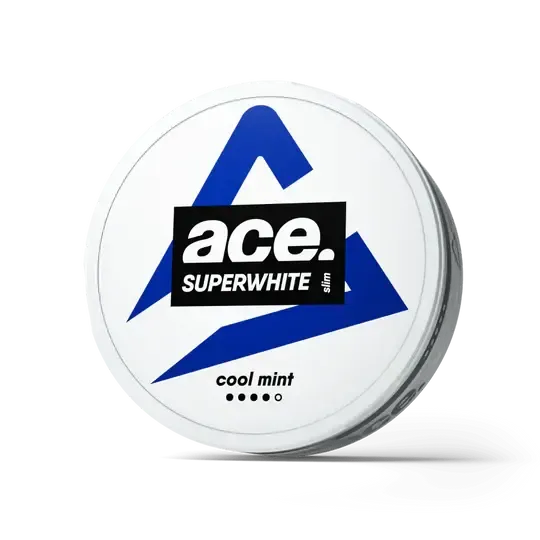



Anyone encountering Snus for the first time quickly runs into contradictory statements. Banned, it says on one side. Legal, on the other. Both are correct ..., but for different things.
The sale of tobacco-containing Snus has been prohibited in Germany for decades, but consumption and possession are not. Additionally, there's a growing gray area around online orders, imports from abroad, and the new generation of tobacco-free nicotine pouches, which legally form a completely different category.
Here you'll learn everything about whether Snus is legal and what regulations apply in Germany or the EU.
What is Snus anyway?
Snus is an oral tobacco product with origins in Sweden, where it has been part of everyday culture for centuries. Traditionally, it consists of moist, pasteurized tobacco offered either loose or in small portion pouches. The pouch is placed between the upper lip and gum, and nicotine is absorbed through the oral mucosa. This happens without combustion and without smoke. Read more in the blog about what Snus is.
In Scandinavia, the product has been firmly established and legal for decades. Internationally, Snus became known through ice hockey and football players who used it as an alternative to cigarettes. The range has since diversified significantly. Besides classic tobacco Snus, there are tobacco-free variants with extracted nicotine that are marketed in Germany under the term Nicotine Pouches or white Snus. These two categories are treated completely differently under the law. This, in turn, is crucial for the question of legality.
The Legal Situation in Germany
Tobacco-containing Snus falls under the Tobacco Products Act (TabakerzG) in Germany, which is based on EU Tobacco Products Directive 2014/40/EU. Paragraph 11 prohibits placing tobacco products for oral use on the market. This also includes the sale of classic Snus in stores and as online shipping to German customers. Additionally, Paragraph 12 regulates that novel tobacco products without EU approval may not be placed on the market.
The ban applies throughout the entire EU with a single exception: Sweden. The country negotiated a special arrangement when joining the EU in 1995 because Snus is part of national culture there. Norway is not an EU member and has also not banned the product. All other EU states follow the sales ban without exception.
What specifically is banned
- The sale of tobacco-containing Snus in Germany, whether stationary in stores or as online shipping to German addresses.
- Commercial import and any resale of Snus by dealers or private individuals with commercial background.
- Placing new tobacco products for oral use on the market without EU approval according to § 12 TabakerzG.
Possession, consumption and import – what is allowed?
The TabakerzG regulates production, marketing and distribution of tobacco products. It explicitly does not regulate private consumption. This means: Anyone who possesses or consumes Snus is not committing a crime in Germany. Neither the TabakerzG nor the associated Tobacco Products Ordinance contain an explicit ban on consumption or private possession.
This distinction is important in practice. Anyone carrying Snus need not fear punishment. The problem arises one level earlier: in procurement. Purchase in German retail is not possible because retailers are not allowed to offer the product. The question thus shifts to import from abroad.
Personal import from abroad
Anyone entering from an EU country – for example after a Sweden or Norway vacation – may bring Snus for personal use. The customs limit is up to 1 kg from EU countries for private needs. This quantity is considered personal use and is not subject to customs objection. Commercial resale is not permitted even with self-imported goods.
For orders from non-EU countries, the situation is more uncertain. Packages can be confiscated by German customs because the product does not comply with EU regulations. Online orders of tobacco-containing Snus from foreign shops remain legally problematic because the sender violates the EU sales ban by shipping to Germany.
Possession and consumption of Snus are not punishable in Germany. Purchase in German retail is illegal for the retailer, however. The gray area lies with online orders from abroad: legally risky for the sender, rarely prosecuted for the recipient in practice.
Why is Snus banned in the EU?
The ban goes back to an EU directive from 1992. At that time, the WHO classified Snus as carcinogenic, particularly because of the tobacco content and the nitrosamines formed during oral use. The EU Council responded with a sales ban for tobacco for oral use. The ban was confirmed in 2014 with the Tobacco Products Directive 2014/40/EU and transferred into German national law in 2016 with the Tobacco Products Act.
Critics of the ban have pointed out for years that Snus has a significantly lower health risk in direct comparison to cigarettes. Since no combustion process takes place, tar, carbon monoxide and most carcinogenic combustion products are eliminated. Specialist articles like "The Great Divide" by health scientist Dr. Delon Human discuss Snus as a harm reduction tool for smokers. The political reality remains clear nonetheless: Legalization at EU level is currently not planned. The lawsuit by the Association of German Tobacco Retailers at the European Court of Justice was dismissed in 2016.
The legal inconsistency is striking: cigarettes, pipe tobacco and chewing tobacco remain legal in Germany despite their considerable health risks. The Snus ban is thus based less on a consistent health protection principle than on a historical political decision that has not been fundamentally reviewed since.
In which countries is Snus banned?
Outside Germany, the legal situation varies greatly. Anyone traveling with Snus should inform themselves beforehand: in some countries, not only sale but also possession is banned.
Europe
| Country | Sale | Possession / Consumption |
|---|---|---|
| Sweden | Legal | Legal |
| Norway | Legal | Legal |
| Switzerland | Legal | Legal |
| Denmark | Legal | Legal |
| Finland | Banned | Allowed |
| Germany | Banned | Allowed |
| Austria | Banned | Allowed |
| France | Banned | Allowed |
| Netherlands | Banned | Allowed |
| Poland | Banned | Allowed |
| Czech Republic | Banned | Allowed |
| Portugal | Banned | Gray area |
| Italy | Banned | Gray area |
| Spain | Banned | Gray area |
| Belgium | Banned | Gray area |
| Greece | Banned | Gray area |
| Hungary | Banned | Gray area |
International
| Country | Sale | Possession / Consumption |
|---|---|---|
| USA | Legal | Legal |
| Canada | Legal | Legal |
| Japan | Gray area | Allowed |
| Australia | Banned | Banned |
| Brazil | Banned | Gray area |
| India | Banned | Banned |
| Singapore | Banned | Banned |
| Thailand | Banned | Banned |
| UAE | Banned | Banned |
Switzerland is not an EU member and has regulated Snus independently. There, the product is legal. In the USA, Snus is under FDA supervision but is legal nationwide. For EU travel: sale banned, possession not actively prosecuted in most countries, but not legally clearly regulated. Countries like Thailand ban Snus completely. If you're caught with Snus there, you risk serious consequences.
Nicotine pouches: the legal alternative in Germany
Tobacco-free nicotine pouches differ from classic Snus in one crucial point: they contain no tobacco. Instead, they consist of plant-based fillers like cellulose, combined with extracted nicotine, flavors and humectants. Because no tobacco is contained, they do not fall under the Tobacco Products Act and are completely legal in Germany. The market has grown strongly in recent years – brands like VELO, ZYN, Lundgrens or Killa are regularly available in German online shops.
In application, nicotine pouches are nearly identical to Snus: the pouch goes under the upper lip, nicotine is absorbed through the mucosa. Anyone familiar with Snus quickly adapts. In terms of taste, the range is broader than with classic Snus – from mint over citrus to berry, there are dozens of variants in light, medium and strong strengths. These products contain nicotine, which can be addictive.
Products in comparison
- Tobacco-containing Snus contains ground tobacco and is subject to the EU sales ban under Directive 2014/40/EU – not legally available in Germany.
- Nicotine pouches (Nicotine Pouches) are tobacco-free, contain extracted nicotine and are legal in Germany and available for online order. Minimum age: 18 years.
- Chewing tobacco contains tobacco but is legal in Germany – because it is intended for chewing and does not fall under the ban for oral tobacco use.
- Caffeine Snus contains neither tobacco nor nicotine, is legally available, but hardly widespread in Germany and not a functional substitute for nicotine-containing Snus.
In conclusion
The legal situation around Snus is more complicated than it appears at first glance. And honestly, also more contradictory than it needs to be. A product that is not smoked, produces no smoke and according to current research is less harmful than cigarettes, remains banned. Cigarettes, however, do not. This is hard to explain. Until something changes at EU level, tobacco-free nicotine pouches remain the only legal option for anyone who knows the experience and doesn't want to wait for a Sweden vacation.